Plenary Lecturers

Professor of Statistics and Data Science
Cornell University
Measuring How Treatments Work Over Time—Even When Our Models Aren’t Perfect
In many real-world studies—like medicine, economics, or education—people receive treatments more than once (for example, adjusting a medication dose each month). As circumstances change over time, it’s hard to tell what part of the outcome is caused by the treatment versus other changing factors. This paper proposes a way to estimate the causal effect of a sequence of treatments that is reliable even if some of our statistical models are not perfectly specified. The key idea, called “sequential model doubly robust,” combines two types of models so that the final estimate stays trustworthy as long as at each time point at least one of them is reasonably accurate. The method is designed for settings with many variables and provides estimates that become more precise with larger samples. In short, it offers a practical toolkit for studying how repeated or time-varying interventions influence outcomes, while being resilient to common modeling mistakes researchers make in complex data.

Professor of Mathematics
Duke University
Title: A visit to the Finsler world
Abstract: The old, familiar adage “A straight line is the shortest distance between two points” is only true in the case of Euclidean spaces, such as the standard plane and its higher dimensional versions, where distance is defined by the Euclidean distance formula. In the real world, ‘distance’ can take on different meanings depending on the situation of interest. For example, when one is sailing on a lake using the wind, one might want to define the ‘distance’ between two points A and B in terms of how long it takes to get from A to B on a sailboat, and the path of least time might well not be a straight line at all, especially if there is a current involved. Considering such situations leads to a more general and flexible notion of distance, called Finsler geometry, which has numerous applications. In this talk, I’ll describe some interesting cases where these ideas arise and some of the theoretical developments that they have inspired, from navigation to Einstein’s theory of relativity.

Professor of Mathematics
Texas A&M University
When can we estimate the parameters in a mathematical model?
Many mathematical models arising in applications involve unknown parameters (variables). This talk focuses on the question of whether and when these parameters can be estimated from experimental data. This is called the problem of parameter identifiability. We will examine how identifiability of a mathematical model is related to identifiability of its submodels. Specifically, we investigate a class of models arising in applications including epidemiology and pharmacokinetics, namely, linear compartmental models; this means that the model is given by linear ordinary differential equations (ODEs). We will show how mathematical tools from linear algebra and combinatorics can be used to tackle the identifiability problem for these models, and along the way we highlight the research contributions of many undergraduate and graduate student co-authors.

Professor of Mathematics / Director
University of Washington / Simons Laufer Mathematical Sciences Institute
A 100 year old question in Geometric Measure Theory
In this talk I will describe a 100 year old question in Geometric Measure Theory that has puzzled many generations and motivated incredible mathematics. I will discuss a very recent and truly amazing result in this area.
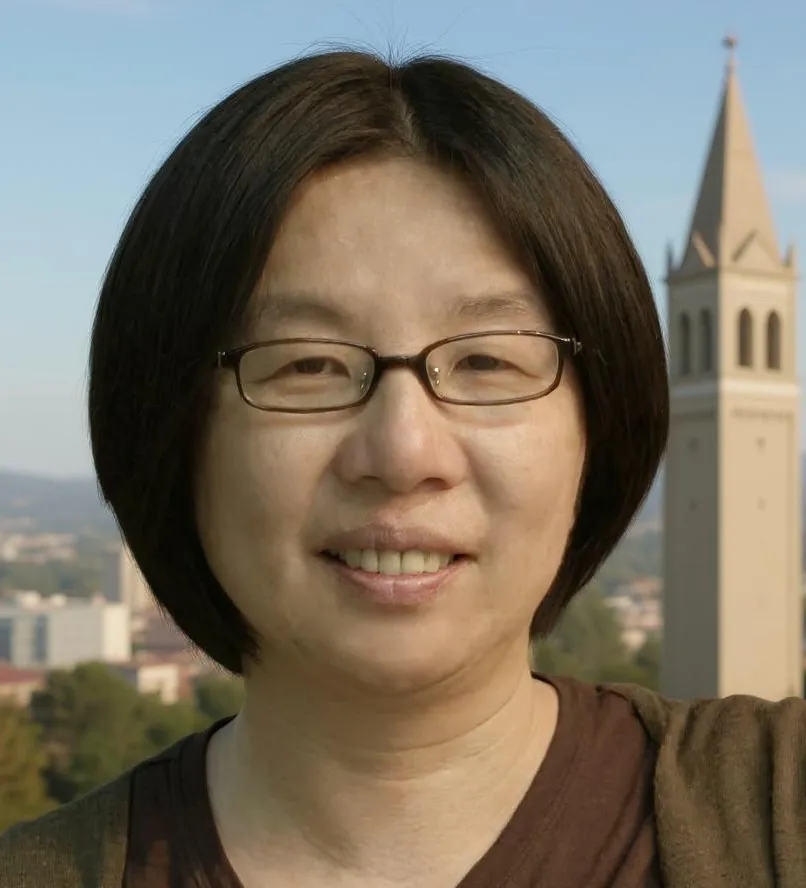
CDSS Chancellor’s Distinguished Professor in Statistics, EECS, and Computational Biology, UC Berkeley
U.C. Berkeley
Understanding, Simplicity, and Decision Trees
In this talk, I will start with David Blackwell's research philosophy to "understand" things through simplicity, elegance and insights, and explain how it influences the pursuit of simplicity and impact throughout my career. I will then share our work on improving decision trees and show its simplicity and usefulness in developing high-stake clinical decision rules.